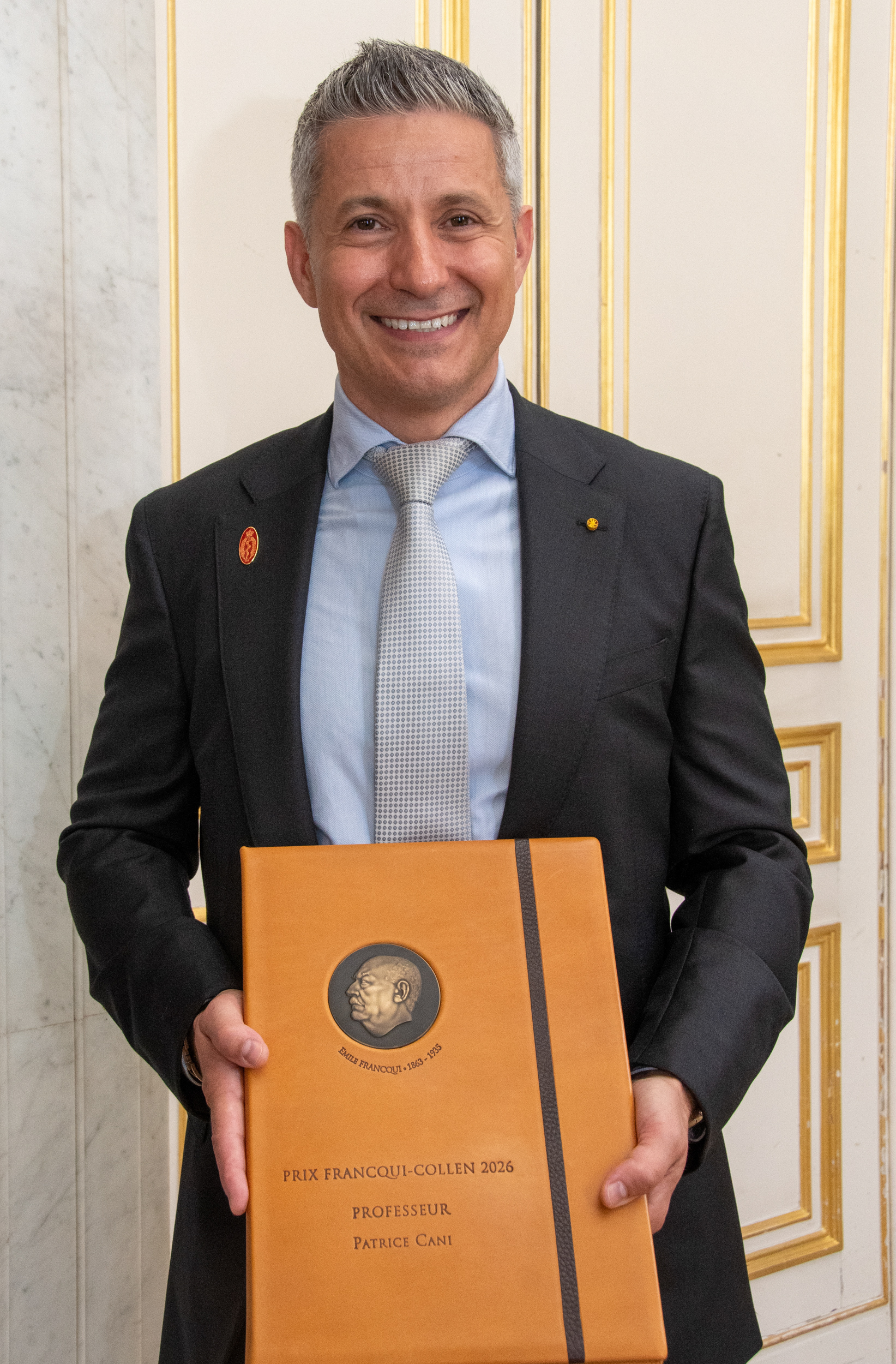
2026 Patrice Cani
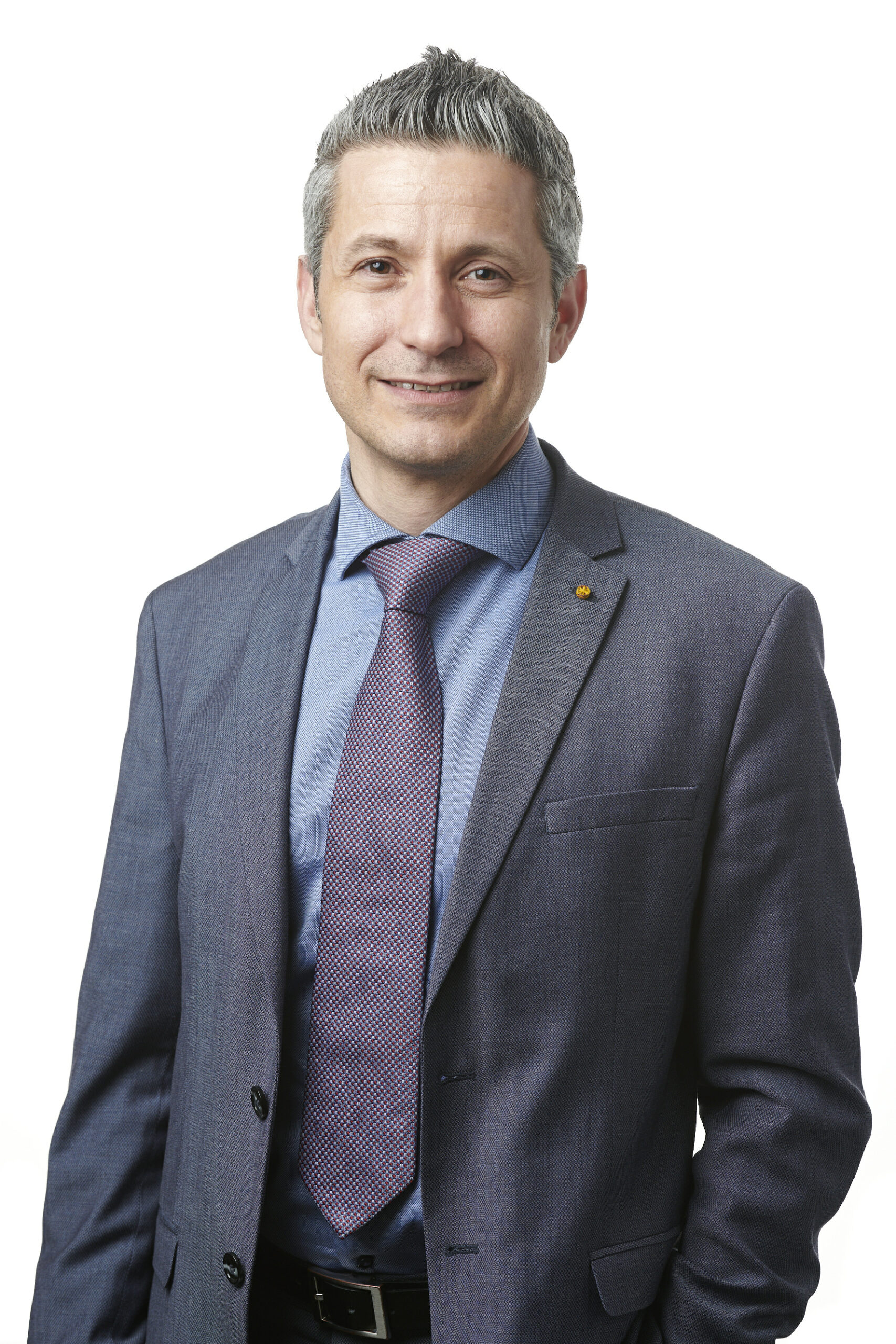
Fundamental Biomedical Research
Full Professor of Physiology, Metabolism and Nutrition
Visiting Professor at Imperial College London
Honorary Research Director FRS-FNRS
Member of the Royal Academy of Medicine of Belgium
UCLouvain
Louvain Drug Research Institute (LDRI) & Institute of Experimental and Clinical Research (IREC)
WEL Research Institute
Career – Research – Jury report
His career
Patrice Cani was born on 26 December 1977 in Belgium, the son of a French mother of Spanish origin and an Italian father. Growing up between two immigrant cultures, he developed early on a drive to surpass himself and an insatiable curiosity for the life sciences. Fascinated from an early age by nutrition and its effects on the human body, he began his higher education with a degree in dietetics (1995) before joining the Faculty of Medicine at UCLouvain, where he successively obtained a Master’s degree in biomedical sciences (human nutrition) (2000), a Master’s degree in health sciences, and in 2005 a PhD in biomedical sciences specialising in physiology, metabolism and nutrition, under the supervision of Professor Nathalie Delzenne. Professor Louis Hue, whose work in biochemistry and the physiology of glucose metabolism has been a landmark reference, remains for him one of the most influential scientific figures of this foundational period.
After completing his doctorate, he joined the laboratory of Professor Rémy Burcelin at Inserm in Toulouse for a decisive postdoctoral stay. It was there that he discovered the concept of ‘metabolic endotoxemia’ and that the first major breakthroughs on the role of the gut microbiota in triggering low-grade inflammation, insulin resistance and type 2 diabetes were born. Published in 2007, this work would make them world pioneers in the field.
Back at UCLouvain in 2009, he developed his research group within the Louvain Drug Research Institute (LDRI), Faculty of Pharmacy and Biomedical Sciences, initially as a Qualified Researcher of the Fund for Scientific Research (FRS-FNRS), then as Research Associate (2017) and Research Director (2021). In 2023, he was appointed Full Professor of Physiology, Metabolism and Nutrition at UCLouvain. Since 2010, he has been a Visiting Professor at Imperial College London, and has held visiting professorship at Université Paul Sabatier in Toulouse and the University of Cagliari (Italy), key hallmarks of the international reach of his research.
In 2013, he co-founded with Professor Claude Knauf the NeuroMicrobiota Lab, an international collaborative network (Inserm/UCLouvain) dedicated to exploring the links between the gut microbiota, metabolism and the brain. That same year he was awarded an ERC Starting Grant (ENIGMO project). In 2016, he founded the spin-off A-Mansia Biotech (later renamed The Akkermansia Company), dedicated to translating his discoveries on the bacterium Akkermansia muciniphila into practical applications. This pioneering company in the nutraceutical applications of the microbiome was acquired by a major commercial player in 2025, paving the way for large-scale distribution.
Author of more than 400 scientific publications, reviews and book chapters, he has been cited more than 80,000 times according to Scopus (H-index: 123) and more than 114,600 times according to Google Scholar (H-index: 144). Every year since 2016 he has appeared on Clarivate’s list of ‘Highly Cited Researchers’ (top 1% most cited researchers worldwide) and since 2020 on Stanford University’s ‘Top 2% Most Influential Scientists in the World’ ranking. He has delivered more than 400 lectures to share his discoveries around the world. Among his most notable distinctions: the Baillet Latour Prize (2015), the ERC Proof-of-Concept Grant (2016), the Bauchau Chair at the University of Namur (2016), the Francqui Chair at the University of Liège (2017), and the AstraZeneca Prize (2022). Patrice Cani is a full member of the Royal Academy of Medicine of Belgium since 2021. He also devotes a significant part of his energy to training the next generation of scientists. He has supervised 16 doctoral theses (3 more are ongoing), mentored numerous postdoctoral researchers, and contributed to the academic development of several former students who are now professors at UCLouvain or researchers in various countries. He also teaches 120 hours per year and plays an active role in university governance, notably as Vice-President of the LDRI and as a member of the UCLouvain Research Council.
Patrice Cani is married to Christine Feyt, a pharmacist and Doctor in biomedical and pharmaceutical sciences (neuroscience). Together they have two daughters, Manon and Emilie, both driven by the same passion for science and medicine: one is completing her second year of medicine at UCLouvain, while the other is preparing to take on the challenge of the medical entrance examination. A vocation that, it seems, runs in the family.
His Research
Patrice Cani’s work lies at the intersection of nutrition, the gut microbiota and metabolic diseases, driven by a constant ambition to connect fundamental research with clinical and societal applications. During his doctoral thesis, he shed light on a gut-brain axis involving certain nutrients (prebiotics) and the gut microbiota in the regulation of appetite control and glucose metabolism. His work identified, in both animals and humans, the essential role played by the gut hormone GLP-1.
His first major contribution dates back to 2007: during his postdoctoral stay in Professor Burcelin’s laboratory in Toulouse, he demonstrated that a high-fat diet induces the translocation of bacterial lipopolysaccharides (LPS) from the gut lumen into the bloodstream, a phenomenon he termed ‘metabolic endotoxemia’. This mechanism triggers chronic low-grade inflammation, now considered one of the central factors in the development of obesity, type 2 diabetes and hepatic steatosis. The landmark paper published in Diabetes (2007) has been cited more than 8,400 times (Google Scholar) and has profoundly reshaped our understanding of the links between the gut microbiota and metabolic diseases.
Drawing on genetically modified preclinical models that he himself generated, he subsequently demonstrated the role of the endocannabinoid system in mediating the effects of the microbiota on neuroendocrine pathways, thus establishing a gut-brain axis. A study published on the cover of Nature Metabolism (June 2025) further demonstrated for the first time that, by activating the intestinal sympathetic nervous system, hypothalamic neurons can rapidly remodel the composition of the gut microbiota, revealing a causal top-down brain-to-microbiota pathway and closing the bidirectional communication loop between the gut and the brain.
Patrice Cani’s most emblematic contribution concerns the bacterium Akkermansia muciniphila. In a study published in PNAS in 2013 (cited more than 5,400 times), he established a causal relationship between this bacterium and metabolic health in mouse models of obesity and type 2 diabetes. His team demonstrated that the pasteurized form of the bacterium retains and even amplifies its beneficial effects on the gut barrier and metabolism. He subsequently identified the membrane protein Amuc_1100 as one of the molecular mechanisms underlying the bacterium’s effects (Nature Medicine, 2017, 2,450 citations). These discoveries paved the way for an exploratory clinical proof-of-concept study in humans (the Microbes4U study), whose results, published in Nature Medicine in 2019 (2,500 citations), showed for the first time in overweight or obese individuals significant improvements in the gut barrier and metabolic markers such as blood lipids, inflammation and insulin sensitivity. The pasteurized form of A. muciniphila has since received authorization as a novel food from European, UK and US authorities, and is now commercially available worldwide.
In parallel, his team discovered, isolated and named a new human commensal bacterium (Dysosmobacter welbionis). Its protective effects on metabolic diseases have been correlated in large human cohorts (approximately 12,000 individuals) and demonstrated repeatedly in preclinical models. Recent work further shows that this bacterium attenuates anxiety and stress related behaviors in obese mice, opening a new avenue into the links between the gut microbiota and mental health.
Taken together, this body of work has transformed our understanding of the role of the gut in health and disease, positioning the microbiome as a central actor in metabolic physiology and a leading therapeutic target, from the laboratory to the patient’s bedside. His motto: ‘In Gut We Trust’.
Jury report (April 24, 2026)
The 2026 Francqui-Collen Prize in Fundamental Biomedical Research is awarded to Prof. Patrice Cani, for his studies aimed at understanding how the bacteria in the gut affect the health of patients. In particular, his work has shown that a single bacterial species in the human gut can be beneficial and he demonstrated that a single protein of this bacterium is responsible for this effect. His work has demonstrated that the bacteria in the gut influence how the human brain functions and conversely, that the human brain influences the barceria in the gut. He has brought his discoveries to patients through a company he established.
Patrice Cani obtained his PhD in Biomedical Sciences from the UCLouvain in 2005. Since 2023 he has been appointed as a full professor at UCLouvain.
He has received multiple awards and honors for his work including:
- 2022 Laureate of a WELBIO Advanced grant (Walloon Excellence in Lifesciences and BIOtechnology)
- 2022 Medal of the Royal Academy of Medicine of Belgium
- 2022 AstraZeneca Foundation Prize
- 2021 Full member of the Royal Academy of Medicine of Belgium
- 2019 Award for Excellence in Biomedical Research and Creativity from the joint scientific committee of the Academies of Medicine of Belgium and France, and the Council of the JA DeSève Research Chair
- 2018 Prize of the National TV RTBF for “The ability of popularization Science work”
- 2017 Belgian Endocrine Society Award
- 2017 Laureate of a FRFS-WELBIO grant (Walloon Excellence in Lifesciences and BIOtechnology)
- 2017 Francqui Chair 2017 (U Liège)
- 2016 Elected Associate member of the Royal Academy of Medicine of Belgium
- 2016 Laureate of the International Prize of Physiology “Lucien Dautrebande” shared with N.Delzenne
- 2016 Adrien Bauchau Chair 2016 (UNamur)
- 2016 Laureate of a PoC ERC Grant 2016, Microbes4U
- 2015 Officer of the Walloon Merit (O.M.W.)
- 2015 Laureate of the Baillet Latour Grant for Medical Research 2015
- 2015 Laureate of the St Luc foundation Transatlantic Bank of Belgium prize
- 2015 Laureate of a FRFS-WELBIO grant (Walloon Excellence in Lifesciences and BIOtechnology)
- 2013 Laureate of an ERC Starting Grant 2013, ENIGMO
- 2013 Laureate of a WELBIO starting grant (Walloon Excellence in Lifesciences and BIOtechnology)
- 2012 Laureate of the SFD (Société Francophone du Diabète) prize, « foreigner researcher »
- 2010 Danone Institute Human Nutrition Research program
- 2009 Laureate of the SFD (Société Francophone du Diabète) “Special Research Allocation”
- 2007 Young Scientist FENS Award “Federation of the European Nutrition Society
Patrice Cani has scientifically distinguished himself through his contributions to understanding the interplay between the gut microbiome, host metabolism and the causation of diseases, especially affecting the important modern epidemics of type 2 diabetes, obesity, cancer and cardiovascular disease. To date, he has published 369 papers that together have been cited over 100,000 times. His discoveries started using mouse models and he successfully confirmed his findings in human studies. He went on to show the importance of a single bacterium, Akkermansia muciniphilia in mouse and human disease, demonstrated that pasteurisation did not remove its beneficial effects and that one specific protein from the bacterium, Amuc_1100, could reproduce the same effect. He subsequently translated these findings into a University spin out company. He has contributed to our understanding of not only the gut – brain axis but also the reverse a brain – gut axis! More recently he has identified a second bacterium that appears to have beneficial effect on the mental state of mice. We look forward to human studies.
For these reasons, the jury has selected Patrice Cani for the 2026 Francqui-Collen award in Biological Sciences.
Members of the international jury
Professor René BERNARDS (Chairman)
Emeritus Professor of molecular carcinogenesis at Utrecht University
Senior staff scientist at division of molecular carcinogenesis at the Netherlands Cancer Institute.
and
Professor Leila Akkari
Professor of cancer-immune interaction at Leiden University
Group Leader at the Netherlands Cancer Institute, Oncode Investigator
Expert in Immuno-oncology, murine models of cancer, tumor microenvironment.
Winner of the 2025 Ammodo Award.
Professor David Andersson
Professor of Neuroscience
Wolfson SPaRC, Institute of Psychiatry, Psychology and Neuroscience
King’s College London
Professor Boudewijn Burgering
Professor at University Medical Center Utrecht
Department Molecular Cancer Research Center for Molecular Medicine
Professor Crisanto Guttierez
Professor at Spanish National Research Council
Centro de Biología Molecular Severo Ochoa
Expert in Genome Dynamics and Function
Professor Guido Kroemer
Professor of the Faculty of Medicine at Paris Descartes University.
Director of the INSERM and the Metabolomics and cell biology platforms of Gustave Roussy
Professor Axel Loewe
Head of Computational Cardiac Modeling
Institute of Biomedical Engineering
Karlsruhe Institute of Technology
Professor Phil Quirke
Professor of Pathology at University of Leeds
Leader of the Leeds Institute of Medical Research Division of Pathology and Data Analytics and the Pathology Colorectal Cancer Group
Academic Training Programme Director for West Yorkshire
Honorary Consultant Pathologist at the Leeds Teaching Hospitals NHS Trust
Professor Neeltje Steeghs
Professor of medical oncology at University Medical Center Utrecht
Medical oncologist and clinical pharmacologist at Netherlands Cancer Institute – Antoni van Leeuwenhoek
Expert in Early Clinical Drug Development in Oncology
Professor Laura van’t Veer
Professor of Laboratory Medicine
Leader of the UCSF Helen Diller Family Comprehensive Cancer Center Breast Oncology Program
Group leader molecular pathology for the Department of Pathology and Division of Experimental Therapy of The Netherlands Cancer Institute.
Leader of the Breast Oncology Program
Associate Director Applied Genomics at the HDFCCC
Professor Lynda Wyld
Professor of Surgical Oncology at University of Sheffield
School of medicine and Population Health
President-Elect of the Association of Breast Surgeons
President of the European Breast Examination Board
Herman Van Rompuy’s address
(June 2, 2026 – Palace of the Academies – Brussels)
We komen elk jaar samen op dit feest van de wetenschap. De jongste jaren is het telkens in een andere context op wereldvlak. Elke dag worden wij wakker met de vraag welk nieuw onweer vandaag op ons afkomt. Daarom is het zo belangrijk dat we hier samen zijn, bovendien in de zeer gewaardeerde aanwezigheid van Z.M. De Koning, om hulde te brengen aan twee onderzoekers die de mensheid en de mensen vooruit willen helpen, die de gezondheid en het welzijn van velen voor ogen hebben, die hun kennis ten dienste stellen van het goede. Hoe mooi klinkt dat eenvoudig woord van goedheid in een wereld die te vaak het boze laat zien. De Francqui Stichting staat nu bijna honderd jaar ten dienste van dat doel. Meer dan ooit willen wij die taak verderzetten.
Zoals u weet is het een internationale jury die de Francqui-Collen prijswinnaars voorstelt aan de Stichting. Ze zijn de waarborg voor onafhankelijkheid en deskundigheid.
Dit jaar zijn de laureaten Prof. Diether Lambrechts (KUL) en Prof. Patrice Cani (UCL) voor resp, de medische en de biologische wetenschappen. Beiden legden een bijzonder parcours af: de eerste studeerde voor bio-ingenieur, de tweede behaalde eerst het diploma in de diëtetiek. Beiden koppelden hun onderzoeksresultaten aan praktische toepassingen en aan het oprichten van eigen start-ups. Hierbij volgen zij het voorbeeld van Prof. Désiré Collen, naar wie deze prijs ook genoemd is.
C’est précisément ce dont nous avons tant besoin en Europe : cette alliance entre inventivité et innovation, la concrétisation de la recherche dans la réalité économique et sociale.
Voor zowel darm- als eierstokkanker ontdekten Prof. Lambrechts en zijn team twee specifieke biomerkers, meetbare indicatoren die iets vertellen over het onderliggend ziekteproces in de kanker. Aan de hand van deze indicatoren kunnen artsen een heel duidelijk ‘ja’ of ‘nee’ antwoord krijgen op de vraag of de patiënt baat heeft bij een specifieke behandeling, zoals immunotherapie.Dank zij prof. Lambrechts zijn we voor specifieke analyses inzake kanker niet meer afhankelijk van andere globale actoren en kan men vandaag hiervoor in België blijven, wat dus een pak goedkoper en toegankelijker is. Prof. Lambrechts zegt terecht: “Er zijn in de wetenschap miljoenen biomerkers beschreven, maar er zijn heel weinig onderzoekers die erin slagen om mede hierdoor effectief een verandering te brengen voor iemand die vandaag of morgen de diagnose kanker krijgt. Dat is waar wij het voor doen”. Het is meer dan een ontdekking. Het is een weldaad.
Le professeur Patrice Cani n’en est pas moins passionné et ambitieux, mais il commence modestement en déclarant : « À l’époque, je ne me suis vraiment pas réveillé en me disant : « Aujourd’hui, je vais travailler sur cette bactérie en particulier. » » C’est ce que l’on appelle la sérendipité, un phénomène bien connu dans le monde scientifique, mais aussi dans la littérature et la poésie. On trouve ce que l’on ne cherchait pas. Mais celui qui cherche avec acharnement rencontre plus vite le hasard. Le professeur Cani a constaté un lien entre l’absence de cette bactérie et des maladies telles que le diabète et l’obésité. L’administration de cette bactérie à ces patients a renforcé à la fois la fonction de barrière de l’intestin et le système immunitaire. Le professeur Cani ajoute : « C’est pourquoi nous avons créé en 2016 une spin-off universitaire, car nous voulions toucher un public aussi large que possible. Ainsi, cette découverte est effectivement passée du laboratoire à l’homme, et la bactérie est désormais disponible dans le commerce à l’échelle mondiale. » Notre lauréat fait partie du top 1 % des scientifiques les plus cités au monde. Vous voyez où la sérendipité peut mener !
En lisant tout cela dans le rapport du jury et ailleurs, je me suis dit qu’ils avaient tous deux leur place dans l’illustre galerie des lauréats du prix Francqui-Collen. Je me souviens de la célèbre phrase prononcée il y a plusieurs siècles, lorsqu’un grand écrivain français ne fut pas admis à l’Académie. « Rien ne manquait à sa gloire ; il manquait à la nôtre. » Cette phrase aurait pu s’appliquer à notre Fondation : si vous n’aviez pas été lauréats, vous nous auriez manqué.
Une autre présence qui nous manque au sein de la Fondation est celle du comte Étienne Davignon, avec ses solutions brillantes même pour des petits problèmes, sa sagesse, sa gentillesse et sa loyauté. Il était toujours membre de notre comité financier à ma demande expresse, après avoir siégé au Conseil d’administration de la Fondation pendant des décennies.
In de vaak onmenselijke wereld die ons omringt worden wij nog gevoeliger voor menselijkheid. De strijd tegen ziektes is een uitdrukking hiervan. Het is een zaak van goede wil maar ook van competentie en excellentie, van organisatie en moed. Onze laureaten verdienen nog vele navolgers in het Noorden en in het Zuiden van het land.
Wij hebben in Europa een uniek model tot stand gebracht van voorspoed voor allen, niet alleen voor de happy few of voor oligarchen. Europa wil geen terrritorium veroveren of vernietigen. We trokken de harde lessen uit ervaringen uit ons eigen verleden. Geen model of geen instelling is echter eeuwig. Ze moeten elke dag en met elke generatie de test van de geschiedenis doorstaan. Dat is het werk van ons allen. Zeker degenen die talent hebben en verantwoordelijkheid dragen, moeten zich daar ten volle van bewust zijn. Daarom zijn ook onze twee laureaten rolmodellen voor hun studenten en voor velen buiten hun auditoria. Terecht zullen zij zeggen dat dit ook een beloning is voor de mensen van hun team. En dat is ook zo.
Nous vivons dans un monde où l’espoir est plus que jamais nécessaire. Nous espérons tous plus d’espoir. La perspective que la science puisse soulager ou changer le sort des patients est un tel signe d’espoir. Elle donne également tout son sens au travail du Prix Francqui-Collen.
L’espoir et le sens ne naissent que de l’engagement envers les autres.
En ces temps troublés que nous traversons, nous devons rester fidèles à l’amour de la vérité. La vérité est en danger. La manipulation et la tromperie gagnent du terrain. Parallèlement, nous devons continuer à chérir l’amour pour nos frères et soeurs humains.
Si nous restons attachés à ces deux valeurs, nous resterons sur la bonne voie.